Beauty / Hair
CAN ROSEMARY OIL REALLY MATCH MINOXIDIL FOR HAIR GROWTH?
A small but frequently cited 2015 trial - and a newer follow-up study - suggest the popular natural alternative has real evidence behind it.
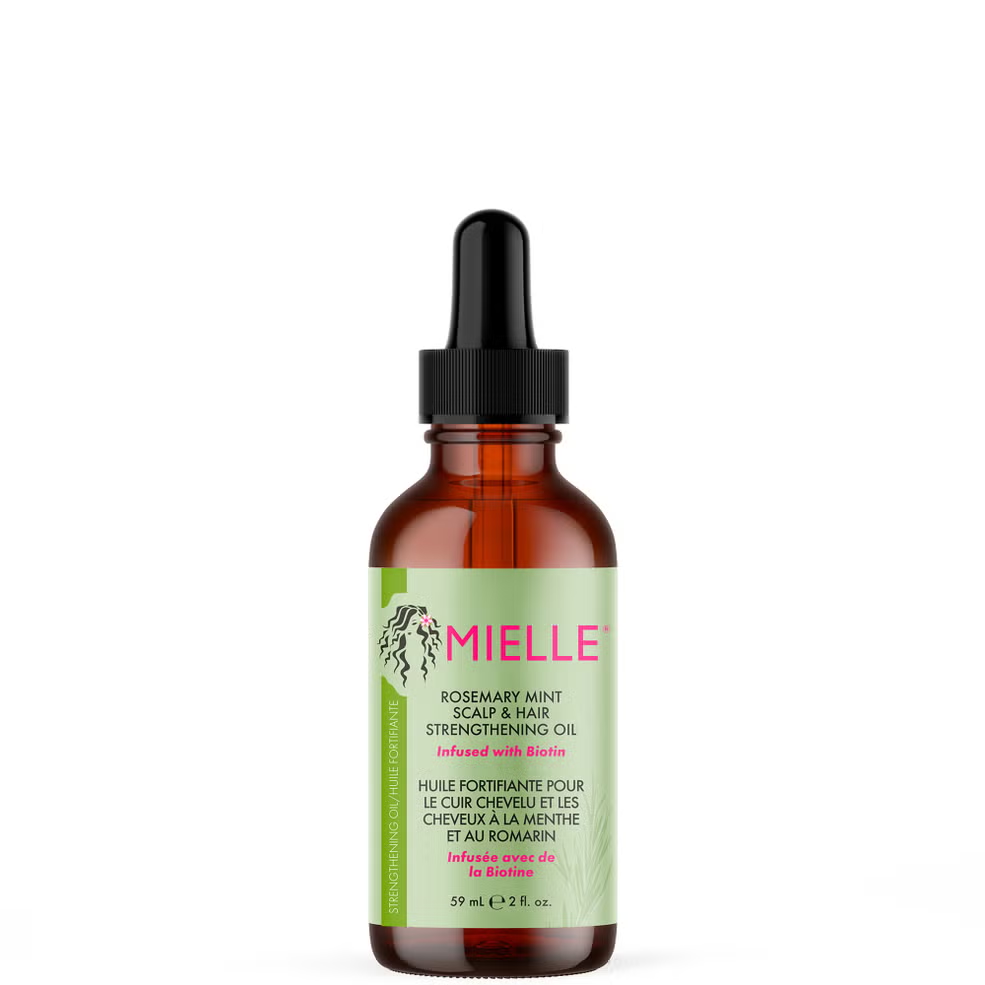
Few natural hair-growth ingredients have generated as much genuine clinical interest as rosemary oil, largely on the strength of a single, frequently cited randomized controlled trial.
Published by Panahi and colleagues in 2015 in the journal Skinmed, the study split 100 participants with androgenetic alopecia - the genetic, pattern form of hair loss - into two groups: one applying rosemary oil daily, the other using standard 2% minoxidil. After six months, both groups showed a statistically similar increase in hair count, with the rosemary group reporting significantly less scalp itching than the minoxidil group.
That single study, while peer-reviewed and properly controlled, carries real limitations dermatologists are careful to flag: a relatively small sample size, a six-month window that doesn't address long-term efficacy, and the fact that it hasn't been extensively replicated at larger scale in the decade since. A more recent double-blind, randomized, placebo-controlled trial involving 90 participants over 90 days found that rosemary-lavender and rosemary-castor oil blends significantly improved hair growth rate, thickness, density and length compared with a coconut oil control - with hair growth rate increasing by roughly 48 to 58 percent from baseline in the treatment groups, according to the published results.
Researchers studying rosemary's mechanism suggest it may work through a pathway similar to minoxidil's, primarily by improving scalp circulation, alongside separate antioxidant and anti-inflammatory properties attributed to the plant's bioactive compounds. Importantly, rosemary oil is not a regulated drug in the way minoxidil is, and dermatologists caution that occasional use or brief-contact rinse-out products are unlikely to replicate results seen in studies using a standardised, daily-applied leave-on preparation over several months.
For anyone considering the switch, the evidence is genuinely more substantial than most social-media natural-remedy trends - but still early enough that most dermatologists frame it as a promising, better-tolerated option worth discussing, rather than a fully proven minoxidil replacement.

About the author
Jing Yi Tan
Fashion editor and writer covering design, image-making and the creative networks connecting Southeast Asia.